Matching Existing Stucco Texture and Color
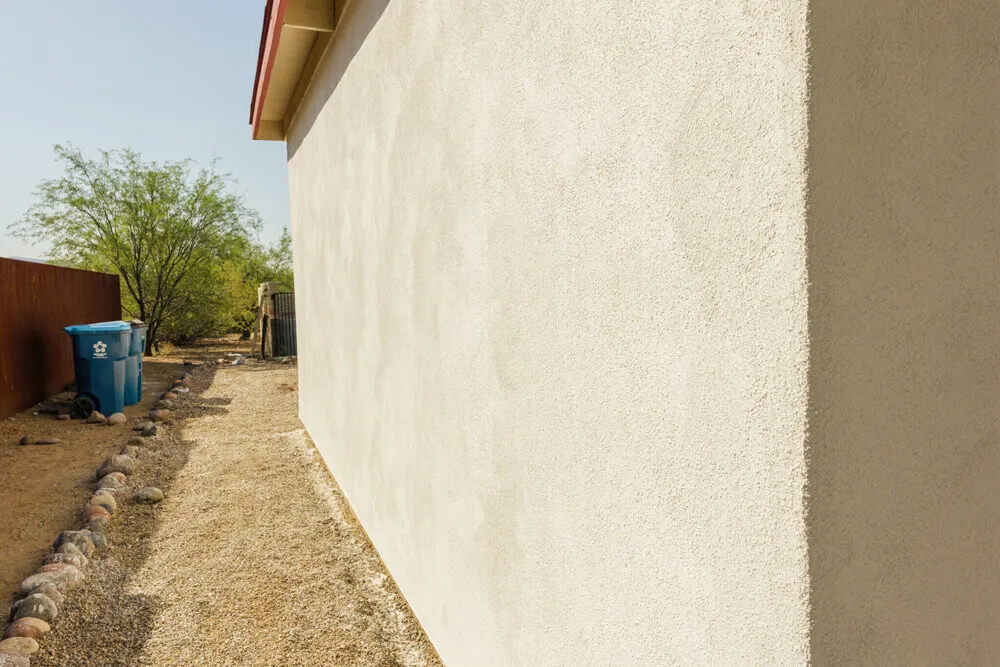
Text a photo. Get a ballpark price the same day.
Send a photo of the damage to 602-228-5012 and you get a price range back the same day. Nobody standing in your driveway, no waiting on a written estimate to find out roughly what you are looking at.
Stand back far enough to show the whole wall, then take one close-up of the damage. That is usually enough. If it is not, we will tell you what else to send.
Monday to Saturday, 7am to 6pm · Prefer to talk it through? Call 602-228-5012
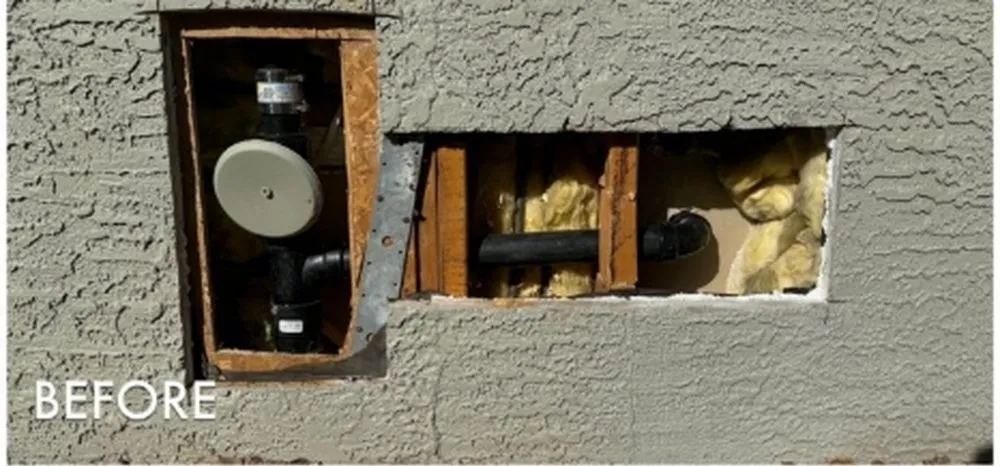
This is what separates a good stucco repair from an obvious one.
Anybody can fill a hole. Getting the patch to read as the same wall, under Phoenix afternoon light, next to material that has been fading since before the housing crash, is the actual skill.
Text a photo to 602-228-5012
The textures we see on Valley homes
Knowing which one you have is the first step. If you are not sure, a close-up photo tells us immediately.
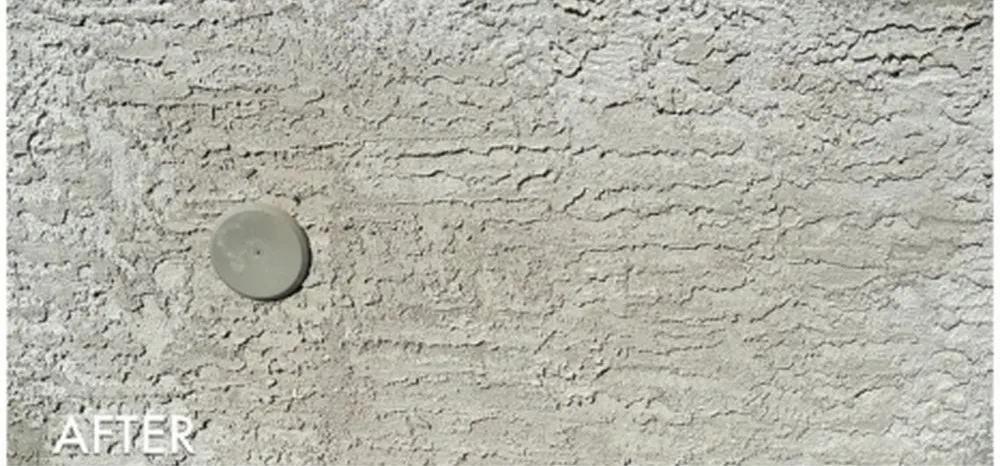
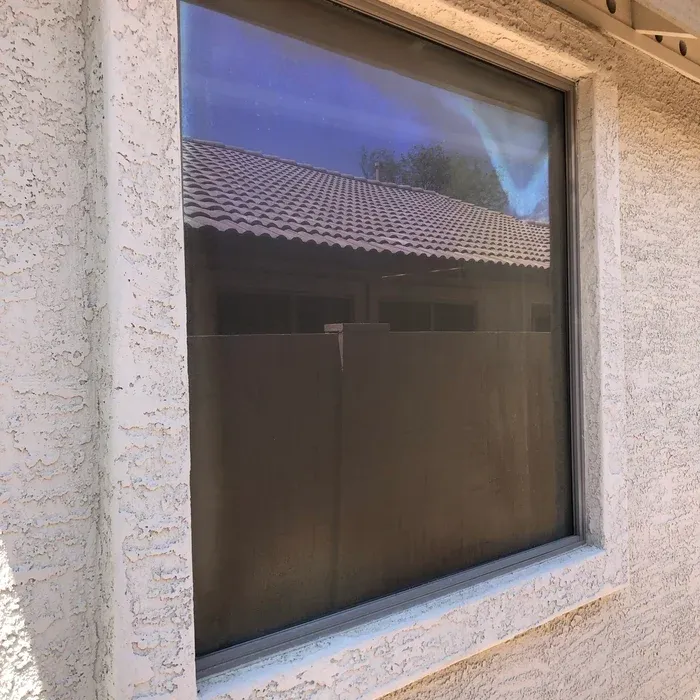
Lace, and lace and skip. By far the most common finish in the Valley. A troweled pattern with raised and flattened areas. The hardest to match by hand, because the pattern has a rhythm to it and a patch done with a different hand motion reads as a patch even when the color is perfect.
Sand finish. Uniform granular texture, fine to coarse. Looks simple, and matching the grain size exactly is fussier than it appears. More on sand finish
Santa Barbara. Smooth, hand-troweled, slightly undulating. Common on Spanish-style and higher-end homes around Arcadia, Paradise Valley and north Scottsdale. Unforgiving, because there is no texture to hide a transition. More on santa barbara finish
Dash and knockdown dash. Sprayed aggregate, sometimes flattened. Matching means matching both the spray pattern and the aggregate size.
Worm and swirl. Older finishes, common on 70s and early 80s homes, distinctive enough that a mismatch is immediately obvious.
Full guide to stucco finish types
Why color matching is harder here than most places
Two reasons, both Arizona-specific.
Fading. Our UV is about as harsh as it gets in the continental US, and it is brutal on pigment. A wall that was terracotta in 2004 is a noticeably different color now, and it faded unevenly depending on which elevations take the afternoon sun. South and west walls will be lighter than north. Matching the original color code gets you the wrong answer.
Cure shift. Fresh cementitious material dries lighter than it eventually settles to. A patch that looks perfect the day it goes on can look wrong two weeks later. You have to match for where it is going, not where it is.
We match to the weathered wall rather than a paint chip, and we account for cure shift.
HOA color approval
If your community requires approved colors, the repair has to satisfy two things at once: the approved palette on paper, and the actual faded condition of your wall. Those are rarely the same color.
We handle this a lot. Bring us the approved palette and we will work within it while matching what is actually on the house. If the two cannot be reconciled, which happens on badly faded elevations, repainting the full elevation in the approved color is usually the cleaner and cheaper answer than fighting it.
When we will tell you to paint instead
Sometimes a perfect match is not achievable. If a wall is badly faded, or the repair covers a large area of one elevation, chasing an invisible patch costs more and looks worse than repairing properly and repainting that face.
We will tell you when we think that is the case. It is usually the cheaper answer anyway.
Our process
- Photograph and identify the existing texture and the direction it was applied
- Mix and apply test samples somewhere inconspicuous
- Let the samples cure long enough to judge true color
- Adjust, then apply to the repair
- Feather the transition instead of stopping at a hard edge
That test-and-cure step is why some repairs take a few days. It is also why they disappear.
Common questions
How close is close?
The goal is that you cannot pick out the repair from ten feet away in normal light. Standing two feet away in raking afternoon sun, somebody who knows what to look for may find it. That is the honest standard, and anyone promising better is overselling.
Can you match a texture nobody applies anymore?
Usually. Older finishes take longer because we are reverse-engineering a technique, but twenty years of Valley walls covers most of what is out there.
Does the match get better or worse over time?
Better, generally. Fresh material weathers toward the surrounding wall over the first year.
Why does my patch look lighter than the wall?
Either it has not finished curing, which takes a few weeks, or it was matched to a paint chip instead of to the actual faded wall. The first fixes itself. The second does not.
Do I need to repaint the whole house after a repair?
Usually not. That is the entire point of matching properly. We only recommend repainting an elevation when the wall is faded far enough that no patch will disappear into it.
Send a close-up
Text 602-228-5012 with a close shot of your wall texture. We will tell you what you have and what matching it involves.
Send the photo, get the number
Send a photo of the damage to 602-228-5012 and you get a price range back the same day. Nobody standing in your driveway, no waiting on a written estimate to find out roughly what you are looking at.
Stand back far enough to show the whole wall, then take one close-up of the damage. That is usually enough. If it is not, we will tell you what else to send.
Monday to Saturday, 7am to 6pm · Prefer to talk it through? Call 602-228-5012